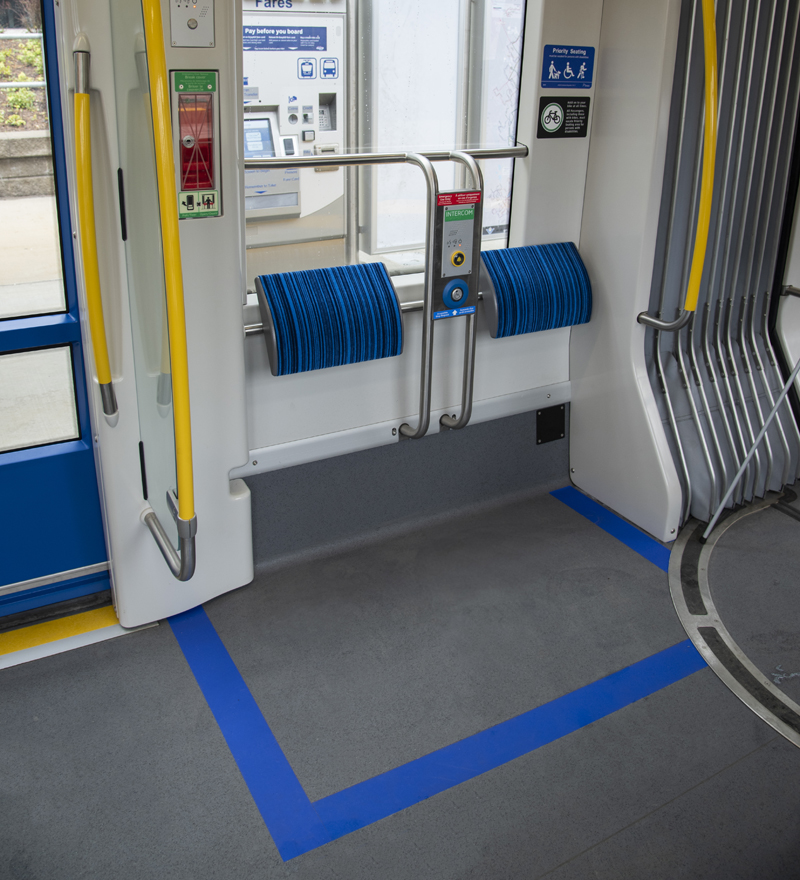
GRT's conventional buses and ION light rail trains are equipped with features to make them fully accessible.
Bus operators will, upon request:
- deploy ramps;
- ensure adequate time is provided to persons with disabilities to safely board, be secured and deboard;
- assist persons with disabilities with boarding, securing, and deboarding, if required;
- assist with securing mobility assistive devices used by persons with disabilities.
GRT conventional buses are accessible, low-floor buses. The operator can lower the front of the bus to a kneeling position so passengers who have difficulty stepping up can board the bus more easily. All buses are equipped with ramps, so passengers with mobility devices like canes, walkers, wheelchairs or small scooters can board the bus on a gentle incline.
If you are unable to use conventional public transit due to a disability, you may be eligible for MobilityPLUS. Eligibility for these services is considered on a case-by-case basis and is not based on a particular disability. GRT's MobilityPLUS service uses small bus-style vehicles to transport people with disabilities. People registered with MobilityPLUS can book rides in advance anywhere within the city limits of Cambridge, Kitchener and Waterloo.
The Transit Support Person program is designed for people who require assistance using transit to get to their destination.
Priority seating
Priority seating is available on all buses and trains for the use of passengers with a disability. These seats are located close to the entrance door of the vehicle and are marked with the blue Priority Seating decal. Remember that not all disabilities are visible!
If you have a child in a stroller, you can use the priority seating area if it is not occupied but must vacate the seat for a customer with a disability.
If you are sitting in the priority seating area and do not need priority seating, please give up your seat to someone who needs it.
On the bus
Operators can play a recorded announcement reminding customers to make space for someone with a disability in the priority seating area. However, operators cannot enforce priority seating or ask customers to give up their seat.
On the ION train
Priority seating is located by the double doors. One area has a pair of padded backrests, the other has a pair of seats that flip down. There are no restraints for mobility devices. To use the priority seating area:
- Position your device parallel to the windows inside the blue box
- Ensure wheels are clear of the circular line on the floor between train cars
- Lock your wheels
Other passengers, including those with bicycles, are required to move from these seats for anyone with a disability or mobility challenge.
If you need more time when exiting the train, press the blue 'Accessible stop request' button in the middle of the priority seating area. The doors will remain open longer so you can exit the train safely.
Priority seating works when we all work together.
Audio announcements
GRT buses and ION light rail trains are equipped with interior and exterior audio announcements. Audio announcements help people who are visually impaired and passengers who are travelling an unfamiliar route.
- Interior announcements: When you are riding the bus, the bus will play an announcement as it approaches each stop, naming the bus stop and street location.
- Exterior announcements: When you are waiting at the bus stop, as the bus comes to a stop and the doors open, it will announce the route number, name and the final destination of the trip.
Stabilizer belts on buses
The wheelchair seating area is equipped with a stabilizer belt to keep passengers in wheelchairs secure while the bus is moving.
- Position the wheelchair facing the back of the bus with the back against the padded post
- Lock the wheelchair in place
- Pull out the stabilizer belt located beside the flipped-up seats
- Pass the belt through the front of the wheelchair frame on the side closest to the seats
- Buckle the belt and make sure it is taut
Emergency response
In the event of an emergency evacuation on the bus, bus operators will identify customers with a disability and provide the appropriate assistance to evacuate them from the vehicle to a safe location.
Vehicle specifications